Mar 12, 2020
A dial gauge-like length measuring instrument with a an angular movable sensor for small length difference measurement is called lever gauge.
Due to its design, it is very well suited for concentrically tests on lathes since the measuring pin cannot tilt. The flat design allows measurements in tight spaces.
With lever gauges it is always possible to measure in two directions.
This allows easy reading of the measured values with analogue devices, using the opposite line scale.
The correct measured value is obtained directly when the lever is parallel to the measuring surface. If the angle is too large, the measured value can be corrected by calculation.
The measuring range is usually between 0.01 and 0.5 mm and the deviations correspond to those of a dial gauge.
The measuring ball on the sensor is usually made of low-wear materials such as carbide or ruby.

Measuring Technology: Lever Gauges have a angular movable sensor.
Related topics:
This information and services are provided by:

This glossary of plastic industry is provided by PLEXPERT Canada Inc.
Sep 22, 2019
The allowed upper and lower gages of a test specimen can be compared with a limit gauge.
It is checked, if the actual dimension of a test specimen is within a tolerance of a requested nominal dimension.
In contrast to the measurements with a caliper or a micrometer, there is no numerical value given.
There is only the statement, if the dimension of the test specimen is good or not.
A big advantage of the limit gauge is the cheap price, compared to e.g. a three-point inside micrometer.
So the limit gauge is very good to figure out if a part is good or needs to be rejected, or if post-treatment is necessary.

Measuring technology: Different kinds of
limit gauges
Related topics:
Measuring technology
This information and services are provided by:
This glossary of plastic industry is provided by PLEXPERT Canada Inc.
Nov 13, 2025
A limit switch is a sturdy electromechanical sensor that detects when a moving machine part reaches a defined position and consequently starts or stops an electrical circuit. An actuator—such as a lever, roller, or plunger—physically engages with the machine, shifting internal contacts (normally open, closed, or both). These switches are typically encased to resist environmental influences like dust, oil, or water and are widely used in automated systems—from garage doors to injection molding machines and hydraulic cylinders. Their design ensures precise control, enhances machine safety, and offers reliable feedback to control systems.

A built-in proximity switch on the left, a micro
limit switch on the right
Related topics:
End-of-travel sensor
This glossary of plastic industry is provided by PLEXPERT Canada Inc.
Dec 27, 2018
The difference between cavity dimensions and part dimensions after molding is called Linear Shrinkage.
It can be influenced by restrains of the mold, crystallinity and orientation.
The orientation occurs due to shear and extensional forces in the polymer and fillers (if the material contains fillers) during filling and packing phase.
The direction and magnitude of the orientation may vary and has a direct effect on the shrinkage.

Nov 6, 2019
Outside micrometers can be controlled and set with a linear standard.
The linear standard has a fixed length and can be also called control dimension or adjustment dimension.
Linear standards are available with a length from at least 25 mm, there are produced according to DIN 863. The measuring surfaces are flat, hardened, grinded and lapped.
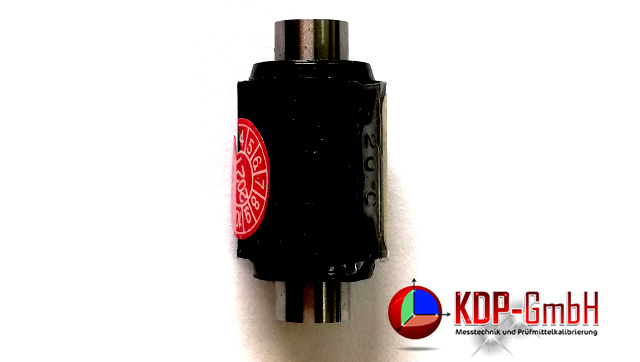
Measuring technology: A
linear standard to set and control outside micrometers.
Related topics:
This information and services are provided by:
This glossary of plastic industry is provided by PLEXPERT Canada Inc.