Sep 12, 2024
The measure of a material’s resistance to the penetration of another (harder) body is called hardness.
In the plastics industry, hardness is used to evaluate the strength and resistance of a material. There are various measurement methods, including Shore hardness, Vickers hardness and Rockwell hardness, each of which measures different aspects of material properties. Hardness testing is important to determine the suitability of plastics for specific applications, particularly in areas where wear resistance and mechanical strength are critical.
Hardness values are often expressed in numbers, with higher values indicating harder materials.
The determination of hardness is a key aspect of material testing and development in the plastics industry.

Quality: Conventional hardness test: (1) Load up to the test load, (2) Creep process under test load, (3) Elastic recovery
Related topics:
Plastic testing
This glossary of plastic industry is provided by PLEXPERT Canada Inc.
Mar 10, 2026
Mechanical surface stiffness of elastomeric materials is determined using measuring systems that record the penetration of a defined indenter under controlled force. In Micro-Shore A and IRHD-Micro testing, the penetration depth of a standardized indenter into materials such as rubber or other elastomers is measured with high precision. A hardness testing device enables this measurement under reproducible conditions and provides quantitative values for evaluating material properties, quality, and aging behavior. Micro-hardness testing is particularly advantageous for thin samples, small components, or localized material analysis due to its high measurement accuracy and comparability.
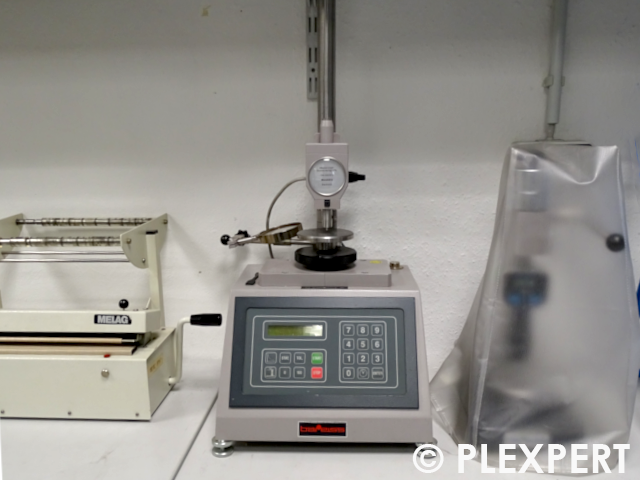
Quality Assurance: Classic measuring device for hardness testing
Related topics:
Hardness
This glossary of plastic industry is provided by PLEXPERT Canada Inc.
Sep 10, 2020
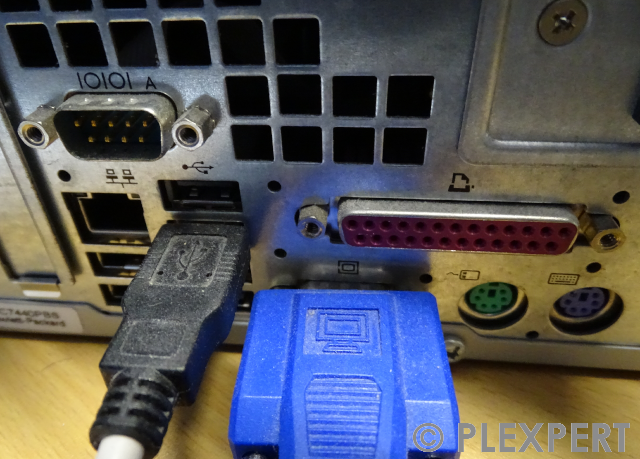
External interfaces used to connect different devices with cables are called ports.
These include network connections as well as USB connections.
In addition to that the term “port” is also used if it comes to socket strips on a computer mainboard.
An additional graphic card is plugged in for example in the socket strip called PCI port.
It has to be noted that the term port is also used if it comes to the description of data exchange between a client and a server.
To avoid confusion it is good practice to add the name software or hardware as prefix to the term port.
Automation Technology: Connections on the backside of a PC called ports
Automation Technology: Ports/ socket strips on the mainboard
Related Topics:
This glossary of plastic industry is provided by PLEXPERT Canada Inc.
Sep 22, 2019
With a share of nearly 15 % polyethylene is considered a mass plastic resin.
However, there are different polyethylene (PE)-types available.
One of them is called HDPE, where HD stands for high density.
Other names for it are Hard-PE or PE-HD.
In it’s molecular structure the low branched polymer chains lead to a high density between 0.940g/cm³ and 0.970 g/cm³.
Due to its dimensional stability in the temperature range of -50 °C to 70 °C the material is versatile.
As an example, HDPE is used for packaging of food, chemicals or cosmetics.
Pipes, jalousies, foam mats and boats are also made from it.
However, HDPE becomes brittle by UV light and loses its good properties.

Plastic: Spray bottle made of
HDPE.
Related topics:
This glossary of plastic industry is provided by PLEXPERT Canada Inc.
Nov 11, 2019
The heating up of the melt due to shear is called dissipation or shear heating.
In the transition area between the frozen boundary layer and the still flowable melt occurs the highest shear in the melt.
The shear depends on the flow rate of the melt and the cross section of the cavity.
The more shear occurs in the plastic the more the melt is heating up.
Too high shear leads to degradation of molecular chains.
Image 1:Plastic:
Flow rate of the melt over the wall thickness
Image 2:Plastic: Tempersturdistribution over the wall thickness
Related topics:
This information and services are provided by:

This glossary of plastic industry is provided by PLEXPERT Canada Inc.