Feb 8, 2019
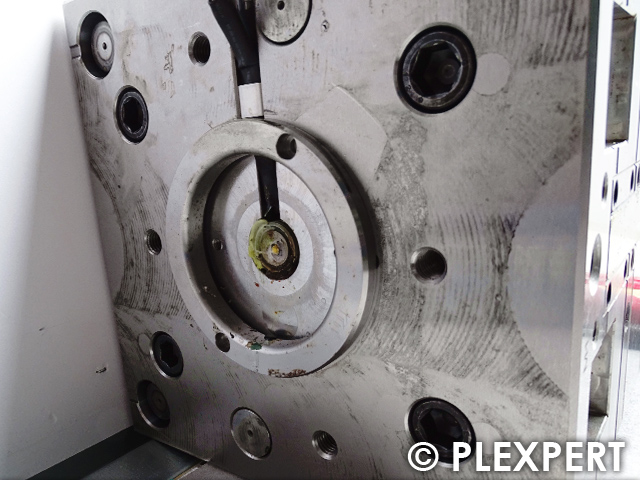
A standard injection mold is split into the injection side and the ejection side.
When the mold is closing, the two halves of the mold are centered through the guide pillars.
In most cases, the guide pillars are fixed on the injection side.
The ejection side moves along with the guide pillars till the mold is completely closed.
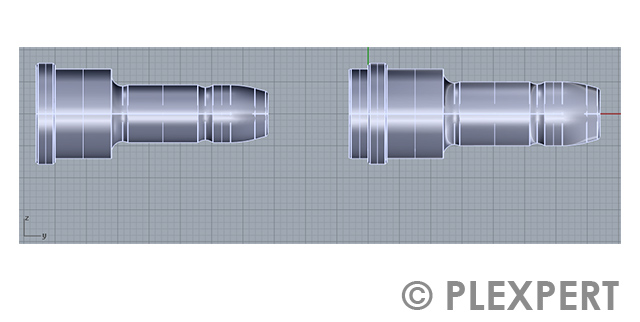
In order to make the movement of the other half of the mold easier, guide pillars can have oil grooves.
Depending on the mold layout, guide pillars can have a centering collar to increase stability.
Four guide pillars will be used in one mold.
It has to be noted that the diameter of the guide pillars varies.
Three of them have the same diameter, one of them has a different one.
This is to make sure the mold cannot be mounted in the wrong way.
Nov 15, 2018
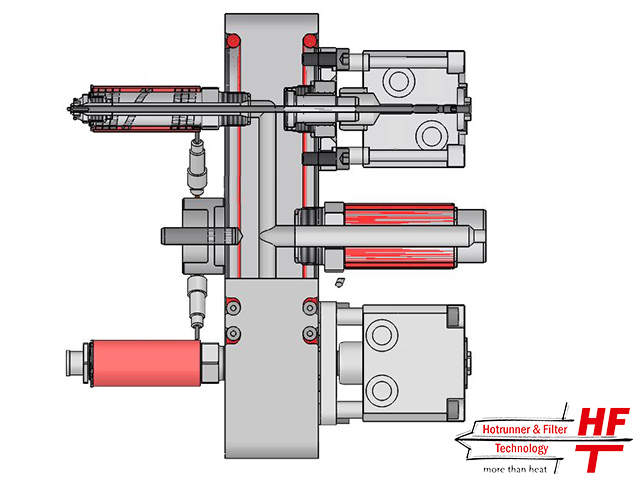
In the mold, the correct temperature transfer between different materials is of crucial importance. The heat transfer inside the mold depends on a material depended-value, the heat transfer coefficient. The higher it is, the better is the transfer of the thermal energy from one material into the next one. As the hot runner system should transfer as little heat as possible to the remaining mold, an air gap helps to receive a small heat transfer coefficient, to get an isolated system.
It is necessary to know, that the heat transfer coefficient is no a constant value. It depends on material specific properties, like specific heat capacity, density and thermal conductivity, as well as geometry and roughness of the surface and for moving fluids on the flow behavior.

Nov 16, 2018
In the injection mold, the hot runner system is thermally isolated with the help of the air gap.
Due to the acting forces it is necessary to use supports of the hot runner system as connection to the surrounding wall of the mold.
To get a preferably low heat lot, Titanium or ceramic is used as material for the support.
Furthermore, the aim is to keep the support as small as possible, but as big as necessary.

Nov 27, 2018
A mold is usually divided into two sides according to their function.
The side with the runner system is called injection side.
This side is not moved, therefore another common name is “fixed side”.

Oct 13, 2020
To check if the parting line of the injection molding mold fit properly on each other inking is used.
This is done by applying inking-colour to one side of the mold (by spraying or brushing).
By closing and reopening the mold the colour is transferred to the other side of the mold.
Now it is easy to see where the mold fits exactly and where it does not.
This is an important information when it comes to subjects like short shot, flash formation or even multi-component molding.
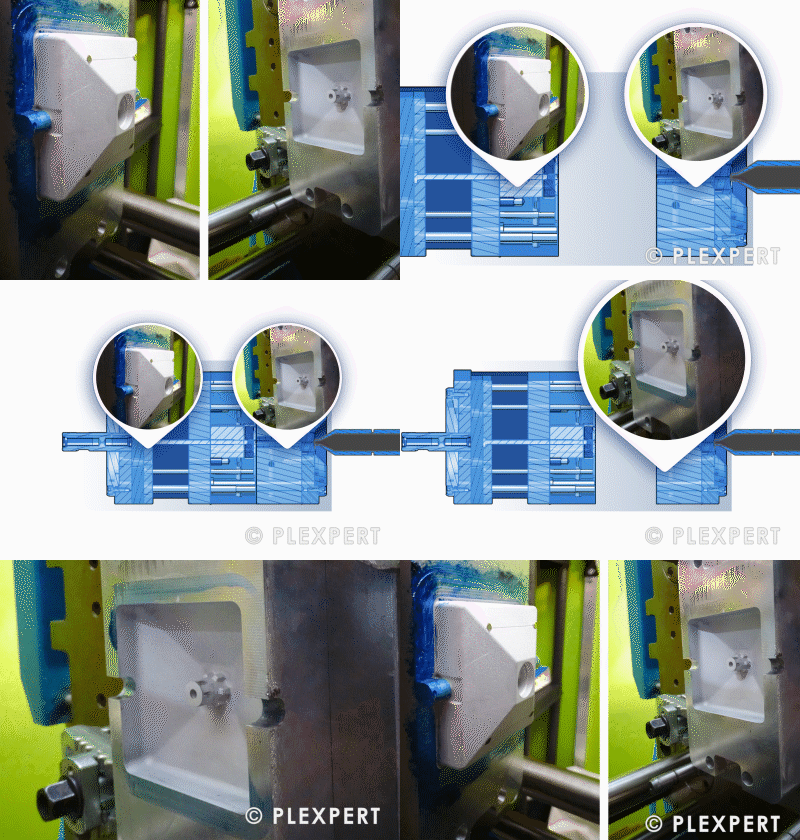
The
inking colour shows where the
parting line fits properly on each other and where not.
Related topics:
This glossary of plastic industry is provided by PLEXPERT Canada Inc.